
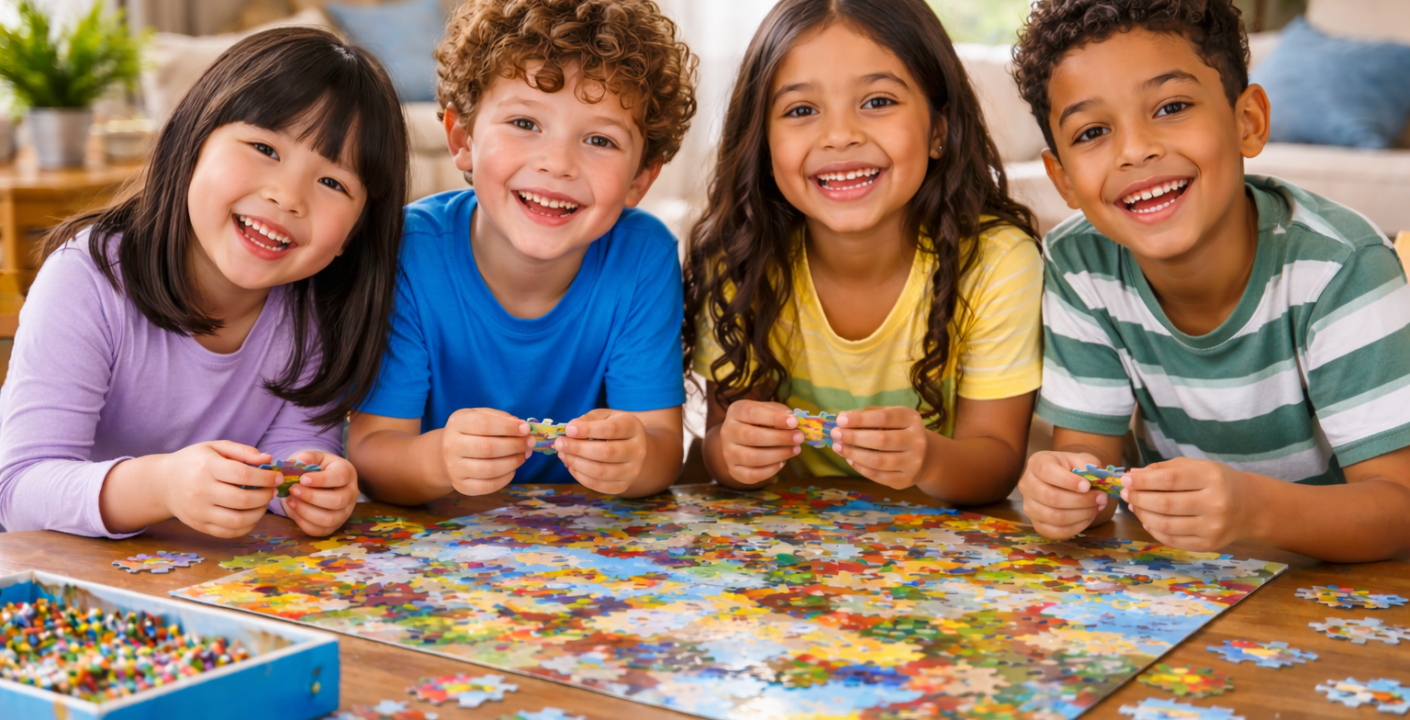

The benefits of puzzles for kids go far beyond keeping little hands busy. Puzzles help children build focus, memory, problem-solving skills, hand–eye coordination, fine motor control, and confidence, one piece at a time. Keep reading to find out the biggest benefits, how to keep puzzle time fun and a guide on how to best pick for your kids ages.
Quick takeaways
Here’s a snapshot view of how puzzles can boost your child’s development:
- Puzzles strengthen problem-solving and spatial reasoning
- They build fine motor skills and hand–eye coordination
- Kids learn patience, resilience, and confidence by persevering
- The “best” puzzle depends on age, piece count, and interest
- Short daily sessions work better than forcing a long sit-down
Why puzzles are so good for children
1) Problem-solving and critical thinking
Puzzles teach kids to test ideas, notice patterns, and try again. They learn that getting stuck is normal, and that progress happens through small steps.
2) Spatial awareness and visual perception
Matching shapes, rotating pieces, and spotting where something fits develops spatial thinking (useful for early maths concepts, reading readiness, and everyday reasoning).
3) Fine motor skills and hand–eye coordination
Picking up pieces, turning them, and placing them precisely strengthens small hand muscles and coordination; skills that support writing, cutting, buttoning and drawing.
4) Focus and attention
Puzzles are a gentle way to practise sustained attention. Even a few minutes of “staying with it” helps children stretch their focus in a calm, enjoyable way.
5) Confidence and emotional resilience
Finishing a puzzle is a real achievement. Kids build confidence through effort, especially when they learn to handle mistakes and keep going.
6) Language and social skills (when you puzzle together)
When children puzzle with an adult or sibling, they hear new words (“corner,” “edge,” “match,” “rotate”) and practise turn-taking, teamwork, and asking for help.
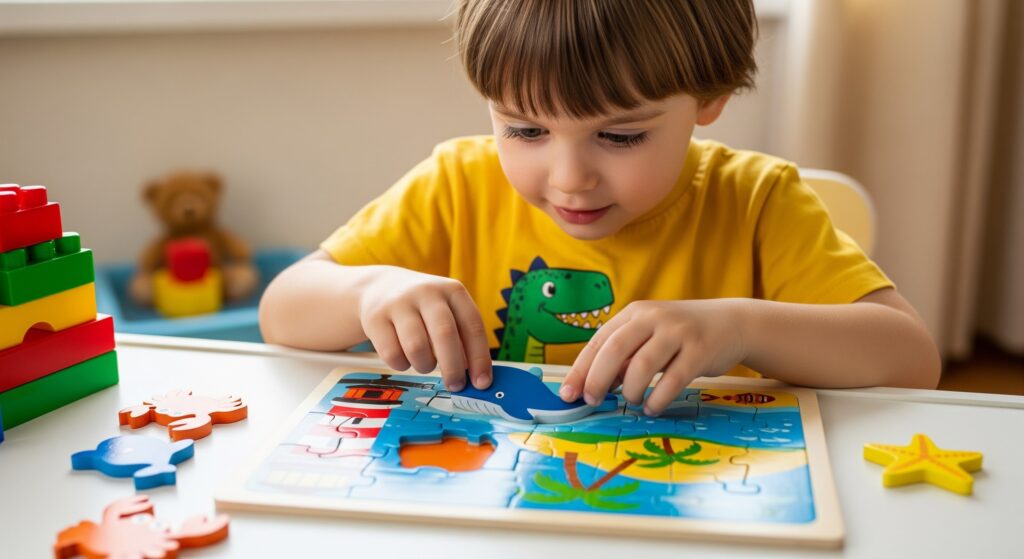
Puzzles by age: what to choose (quick guide)
Every child is different, but this guide helps you avoid puzzles that are too easy (boring) or too hard (frustrating).
1–2 years
- Chunky wooden puzzles, knob puzzles, big shapes
- 2–6 pieces
- Simple pictures and strong outlines
2–3 years
- Big-piece jigsaws, simple scenes
- 6–12 pieces
- Clear themes (animals, vehicles, everyday objects)
3–5 years
- Floor puzzles, tray puzzles, early jigsaws
- 12–48 pieces
- More detail and slightly smaller pieces
5–8 years
- Classic jigsaws with detailed scenes
- 50–200 pieces
- Great for building stamina and strategy (edges first, then colours)
8+ years
- 200+ pieces, challenge puzzles, brain puzzles
- More complex images and longer build times
How to choose the right puzzle (a parent-friendly checklist)
Match the piece count to their “happy effort”
A good puzzle should feel like: “I can do this… with a little thinking.”
If your child melts down quickly, go down a level. If they finish too fast, go up slightly.
Choose a theme they genuinely love
Interest drives persistence. If they’re obsessed with dinosaurs, ballerinas, animals, space, vehicles, they’ll stick with it longer.
Consider material and durability
- Wooden puzzles: great for toddlers, sturdy, easy to grip
- Cardboard puzzles: more variety, good for older kids, larger piece counts
Think about where it will be used
- At home: bigger puzzles and floor puzzles are great
- On the go: magnetic travel puzzles are brilliant for restaurants, road trips and waiting rooms
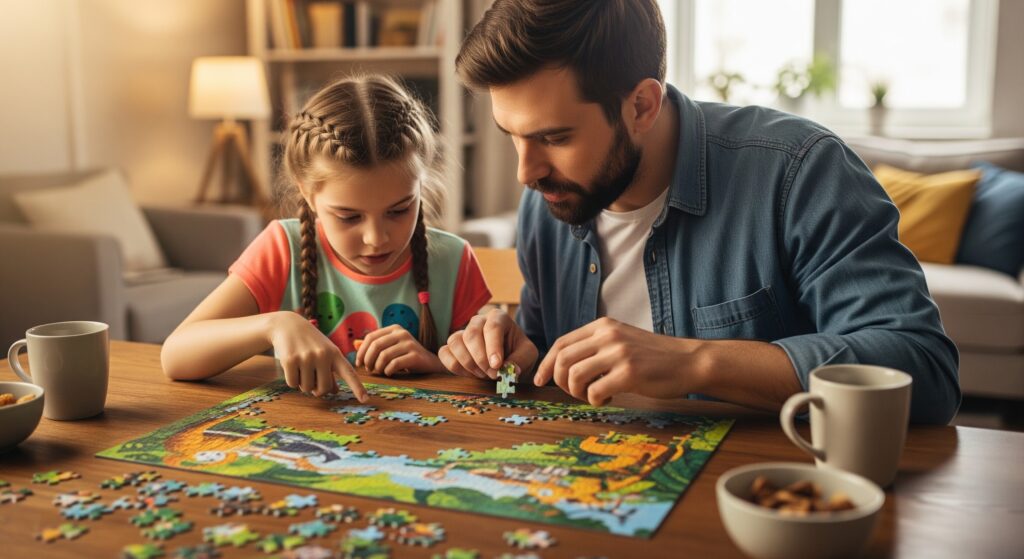
Tips for introducing puzzles (and keeping it fun)
Start together, then step back
Do the first few pieces with your child, then let them take the lead. Your job is to keep it enjoyable, not perfect.
Use simple strategies kids can learn
- Find the edge pieces first
- Sort by colour or pattern
- Build a small “starter section” (like the sky or a big animal)
Keep sessions short
Five minutes every day is better than “we must finish it now.”
Puzzles build skill through repetition.
Rotate puzzles to keep them fresh
Put a finished puzzle away for a few weeks, then bring it back, kids often re-engage with excitement.
Create a puzzle-friendly space
A tray, mat, or dedicated corner prevents pieces getting lost and makes it easier to return to later.
If your child gets frustrated, try this
- Drop down a level (fewer pieces) and rebuild confidence
- Give “choice support”: “Do you want to find corners or colours?”
- Offer a tiny hint, not the solution
- Use the “3–1 method”: adult finds 3 pieces, child places 1
- Celebrate effort: “You didn’t give up, that’s amazing.”
Shop puzzles by goal (easy ways to choose)
If you’re not sure where to start, pick based on what you want puzzle time to help with:
- For beginners: starter puzzles (larger pieces, simpler scenes)
- For travel: magnetic puzzles (compact + mess-free)
- For a challenge: brain puzzles and logic-style puzzles
- For older kids: 200-piece puzzles and up for longer builds
FAQs
What are the benefits of puzzles for toddlers?
Puzzles help toddlers build fine motor skills, hand–eye coordination, early problem-solving, and patience, plus language when you talk through the pieces together.
How many pieces should a 3-year-old puzzle have?
Many 3-year-olds do well with 12–24 pieces, but it depends on the child and the puzzle image. Start easier and move up.
How many pieces should a 5-year-old puzzle have?
Often 24–60 pieces is a good range, especially with clear images and larger pieces. Some kids enjoy 100+ if they’re puzzle fans.
Are wooden puzzles better than cardboard puzzles?
Wooden puzzles are fantastic for toddlers (durable, easy grip). Cardboard puzzles offer more variety and larger piece counts for older kids.
What are good travel puzzles for kids?
Magnetic puzzles are a favourite because pieces stay put and the sets pack neatly for restaurants, holidays and car trips.
The best puzzles grow skills and confidence
Puzzles are one of the simplest ways to support learning through play. They help children practise thinking, focusing, coordinating, and persevering, and they build genuine confidence when kids realise they can solve something one step at a time.
Ready to find a puzzle that fits your child’s age and interests? Explore Sugardots’ puzzle games collection.