
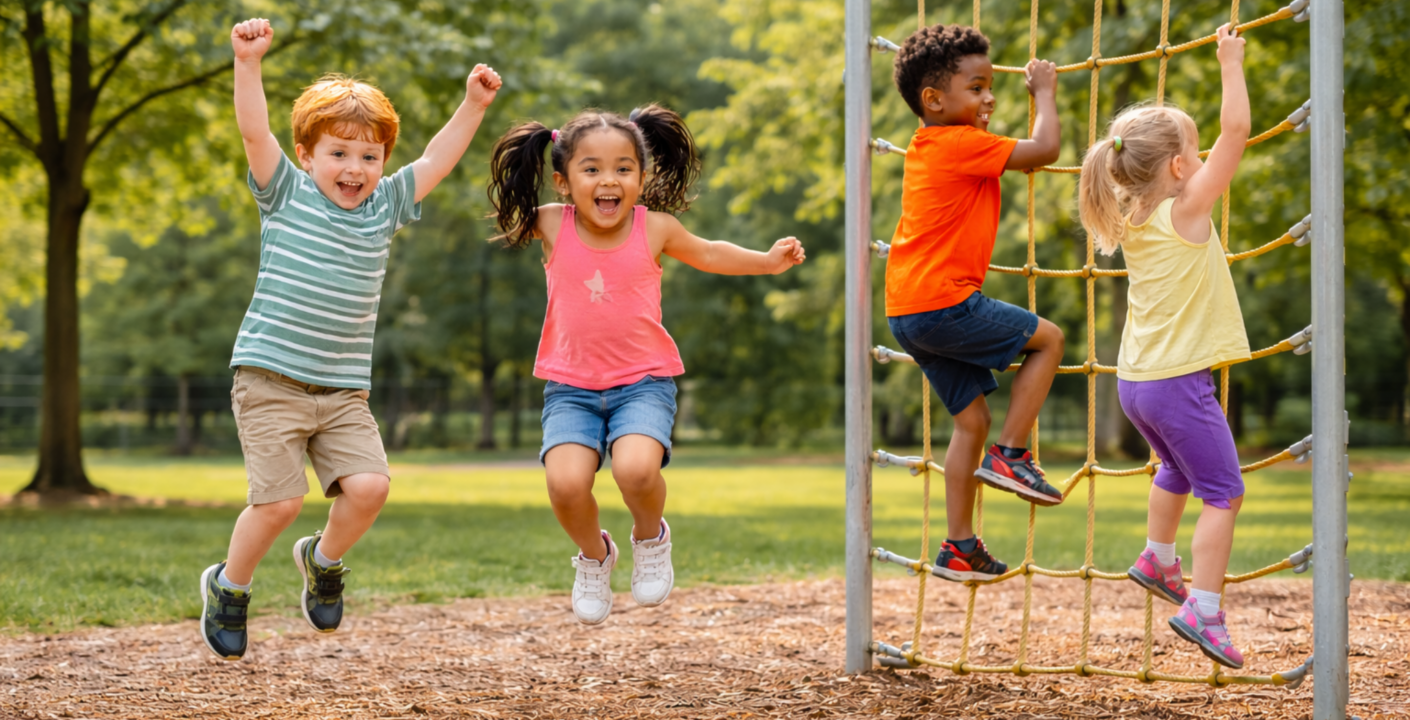

Gross motor skills benefits show up in everyday life when kids learn to roll, crawl, walk, run, jump, balance, climb, throw and kick; they’re building the foundation for confident movement and healthy development. Strong gross motor skills support strength, coordination, posture, endurance, independence and self-esteem, and they make active play feel easier and more fun.
In this guide, we’ll cover:
- The biggest gross motor skills benefits for kids
- Milestones by age (what’s typical)
- Easy gross motor activities for home and outdoors
- Toys and games that support balance, coordination and confidence
What are gross motor skills?
Gross motor skills are movements powered by the large muscles in the body: legs, arms, core, shoulders and back. They help children control posture, stay balanced, coordinate both sides of the body, and build strength.
These skills develop gradually through everyday movement and play: tummy time, crawling, climbing, dancing, chasing a ball, scooting, hopping, or balancing along a line.
Why gross motor skills matter
When kids build strong gross motor skills, they don’t just become “more active”; they become more capable. Here are the biggest benefits:
1) Stronger bodies and better endurance
Active play strengthens muscles and helps children build stamina for school, sport, and long days of exploring.
2) Better balance and coordination
Balance and coordination help kids move safely and confidently, especially when they’re learning new skills like riding a scooter or climbing at the playground.
3) Greater confidence and independence
Movement mastery boosts self-esteem. When a child learns to jump with both feet or catch a ball, they feel proud, and that confidence shows up elsewhere, too.
4) Supports learning readiness
Gross motor skills support body control, attention, and posture, useful for sitting comfortably, following instructions in games, and participating in group activities.
5) Healthier habits (and more outdoor time)
When movement feels fun and achievable, kids are more likely to choose active play, an important habit in a screen-heavy world.
Gross motor milestones by age (quick guide)
Every child develops at their own pace, but these are common gross motor milestones:
0–6 months
- Lifts head during tummy time
- Pushes up on arms
- Rolls (often tummy to back first)
6–12 months
- Sits without support
- Crawls (or moves in their own way: commando crawl, bottom shuffle)
- Pulls to stand, cruises along furniture
12–24 months
- Walks independently
- Climbs onto low furniture
- Kicks a ball (often more “push” than kick)
2–3 years
- Runs more smoothly
- Jumps with two feet (developing)
- Walks upstairs with help/handrail
3–5 years
- Hops on one foot (emerging)
- Pedals a trike/bike with support
- Throws and catches better, starts balancing longer
5–8+ years
- More confident skipping, hopping, jumping
- Better ball skills and coordination
- Can learn more complex movement games and sports basics
A gentle note: If you’re worried about delays, frequent falls, ongoing pain, or loss of skills, it’s worth chatting to a paediatric professional for guidance.
Gross motor activities you can do today (by age)
Toddlers (1–3 years): simple, short, repeatable
Keep it playful and aim for 5–10 minutes at a time.
- Animal walks: bear crawl, crab walk, bunny hops
- Pillow path: step across cushions “over the river”
- Ball roll + chase: roll a soft ball and crawl/run after it
- Dance freeze: dance to music, freeze when it stops
- Push/pull play: push a box of toys, pull a basket with a rope (supervised)
Watch below one of our toddler games that promotes movement in young kids.
Preschoolers (3–5 years): balance, coordination, and “can you do it?”
- Tape-line balance beam: walk heel-to-toe along masking tape
- Obstacle course: crawl under a chair, jump over a cushion, toss a beanbag into a bucket
- Hopscotch: chalk outside or tape squares indoors
- Throw + catch progression: big soft ball, then smaller ball
- Target toss: beanbags into bowls at different distances
Big kids (5–8+): skill-building + friendly challenges
- Skipping rope basics: start with “jump over the snake” (rope on the floor)
- Agility ladder (DIY): tape ladder squares on the floor
- Ball skills: dribble, pass, bounce-catch, kick targets
- Relay races: forward run, backward walk, side shuffle
- Scooter skills practice: start/stop, turn, glide, foot switching (helmet on!)
Toys and games that help build gross motor skills
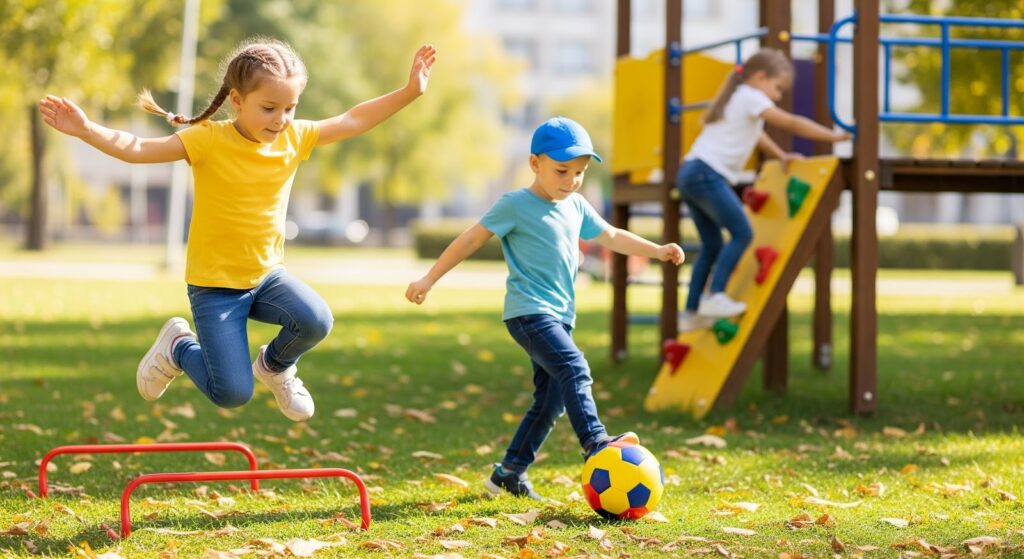
You don’t need a home; gym, great gross motor support comes from toys and games that encourage movement naturally:
Balance & coordination
- Scooters, balance boards, stepping stones (age-appropriate)
- “Floor is lava”-style setups using cushions and safe stepping targets
Throwing, catching & aim
- Soft balls, beanbags, ring toss, target games
- Start close, gradually increase distance
Cooperative movement games
Games where kids move together help with coordination and social skills.
Puzzles + movement combo (for fidgety kids)
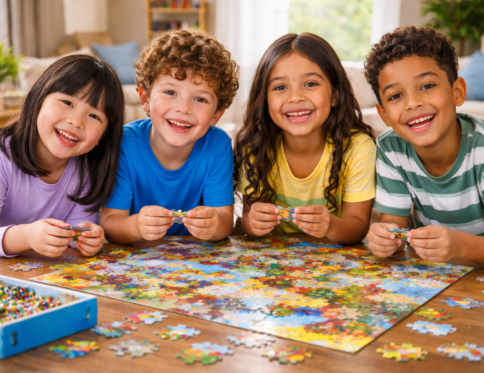
Some children focus better after movement. A quick “jump-break” before puzzles or board games can make playtime calmer and more enjoyable.
Tips for building gross motor skills (without pressure)
- Choose progress over perfection: small wins add up
- Repeat favourites: repetition is how skills “stick”
- Mix indoor and outdoor play: variety builds adaptability
- Keep safety simple: clear floor space, soft landing zones, supervision
- Follow their lead: if they’re into throwing today, lean into it!
FAQs
What’s the difference between gross motor and fine motor skills?
Gross motor uses large muscles (running, jumping, balancing).
Fine motor skills uses smaller muscles (grasping, drawing, buttoning, cutting).
What are good gross motor activities for toddlers?
Try animal walks, dancing, pillow paths, ball roll-and-chase, and simple obstacle courses.
Are scooters good for gross motor skills?
Yes, scooters can support balance, coordination, core strength and confidence when used safely with protective gear and supervision.
How do I improve my child’s balance?
Use tape-line walking, stepping-stone games, hopscotch, and gentle “balance challenges” (like standing on one foot while counting).
When should I be concerned about gross motor delays?
If your child avoids movement, falls extremely frequently, shows significant trouble keeping up with peers, or loses previously learned skills, consider seeking professional advice.
Movement skills grow through play
Gross motor development doesn’t have to be formal or int;nse, it thrives in everyday play. A few minutes of movement each day (climbing, tossing, balancing, dancing, scooting) can make a meaningful difference over time.
Want to support active play at home?
Explore Sugardots range of games and toys to find age-appropriate options that build confidence through movement.